How a chapter works
A chapter is not an office. It is a person, a list of local organizations, and a standing commitment to make sure those organizations get seen.
Every chapter runs on the same model. A local lead identifies the AAPI organizations, artists, and cultural groups doing work in their city. Our national team handles the parts that are expensive to build and cheap to share: campaign production, graphic and content design, the event calendar, the mailing list, and the analytics that tell us whether any of it worked.
The local lead brings what we cannot supply from Chicago. They know which festival organizer is short on volunteers, which language school just lost a grant, and which restaurant owner has never had a professional photograph taken of their food. That knowledge is the entire product. Everything else is infrastructure.
Chapters open in stages. We begin by listening: meeting organizations, attending events, and mapping who is already doing the work. Then we start promoting, usually with a handful of pilot partners, and we measure what moves. A chapter is considered active once it is consistently publishing local events and delivering marketing support on a regular cycle.
Where we are
Grouped by region. Chicago is our headquarters. Every other city is in development, each at a different stage.
Northeast

Boston
In development · Seeking a chapter lead
Greater Boston holds one of the oldest Chinatowns on the East Coast alongside substantial Vietnamese, Cambodian, Indian, and Korean communities spread across Quincy, Malden, Lowell, and Dorchester. The density of universities means a constant flow of student organizations, many of which run genuinely ambitious cultural programming on almost no budget and then graduate out of existence every four years.
That churn is the specific problem we want to solve in Boston. An event that took a student group six months to plan often gets three days of promotion and then disappears along with the organizers. A chapter here would focus on continuity: a calendar that outlives any single cohort, and a promotional pipeline community organizations can rely on year after year.
New York
In development · Seeking a chapter lead
New York has more Asian American residents than any other city in the country, and they are spread across all five boroughs: Chinatown in Lower Manhattan, Flushing and Elmhurst in Queens, Sunset Park in Brooklyn, Koreatown on 32nd Street, the South Asian and Himalayan communities of Jackson Heights, the Filipino blocks of Woodside, and the Indo-Caribbean and Punjabi neighborhoods of Richmond Hill.
The problem in New York is not a lack of media. It is noise. The city has more outlets than anywhere else in the country, and almost all of that attention goes to large institutions with communications staff. A block association in Sunset Park or a dance troupe in Flushing competes for the same feed as every major venue in Manhattan, and usually loses. A chapter here would focus on cutting through: getting grassroots groups in front of the neighbors a few stops away who would show up if they knew.
Midwest

Chicago
Headquarters
Chicago is where the work started and where every program gets tested before it travels. The city's AAPI communities are spread across neighborhoods that rarely share an audience: Chinatown in Armour Square, the Vietnamese businesses along Argyle Street in Uptown, South Asian commerce on Devon Avenue, Filipino communities on the Northwest Side, and Japanese and Korean institutions scattered across the North Side and the suburbs.
That geographic spread is exactly why a shared calendar mattered. A cultural festival in one neighborhood was invisible to a community twenty minutes away that would have shown up for it. Our Chicago work has always been about closing that distance, and it remains the model for every chapter we open.
We work most closely here with Chicago Asian Network, a separate local organization that currently publishes community events and articles while our own platform is built. Community submissions route through them and we review them together.
South

Houston
In development · Seeking a chapter lead
Houston is one of the most demographically diverse metro areas in the United States, with large and long-established Vietnamese, Chinese, Indian, Pakistani, and Filipino communities. The Asiatown corridor along Bellaire Boulevard alone supports hundreds of AAPI-owned businesses, and the region's cultural organizations operate at a scale most cities never reach.
The challenge in Houston is not a lack of activity. It is sprawl. Communities are separated by highway distances that make collaboration logistically hard, and organizations that would be natural partners often have no idea the other exists. A Houston chapter would concentrate on connection: making the region's AAPI organizations visible to one another, not only to the general public.

Oklahoma
In development · Seeking a chapter lead
Oklahoma City's Asian District along Classen Boulevard grew out of Vietnamese resettlement in the 1970s and remains one of the most concentrated AAPI commercial corridors between the coasts. Alongside it are Hmong, Chinese, Indian, and Marshallese communities across the state, many in smaller cities with no local media covering them at all.
Oklahoma is the clearest case for why we exist. In large coastal metros, an AAPI organization has at least some chance of press coverage or an established nonprofit ecosystem to lean on. In much of Oklahoma, community groups operate with no marketing support of any kind and no obvious place to turn. A chapter here would be the first professional promotional resource many of these organizations have ever had access to.
West
Los Angeles
In development · Seeking a chapter lead
Los Angeles County is home to more Asian Americans than any other county in the country. The communities run from Little Tokyo, Chinatown, Koreatown, Historic Filipinotown, and Thai Town near downtown, out to the San Gabriel Valley cities of Monterey Park, Alhambra, and Rowland Heights, the Japanese American neighborhoods of Gardena and Torrance, Little India in Artesia, Filipino and Samoan communities in Carson, and Cambodia Town in Long Beach.
The challenge in LA is that the city runs on attention, and almost none of it reaches community groups. The region is full of AAPI artists, filmmakers, and cultural organizations, but visibility tends to go to whatever has a studio or a publicist behind it. Many of these communities also sit in separate cities with their own governments and little shared local media. A chapter here would focus on giving grassroots organizations and independent artists a platform that does not depend on industry connections.

Seattle
In development · Seeking a chapter lead
The Chinatown-International District carries more than a century of Chinese, Japanese, and Filipino history, and the wider Puget Sound region holds significant Vietnamese, Korean, Indian, and Pacific Islander communities across Beacon Hill, White Center, Kent, and Renton. Seattle also has an unusually strong tradition of AAPI arts organizations, from theater companies to independent filmmakers.
What community organizations here describe is displacement, both literal and attentional. Rising costs have pushed communities outward from historic neighborhoods, and the organizations serving them are increasingly spread across suburbs while their institutional identity stays anchored downtown. A chapter here would work on keeping those relocated communities connected to the audiences and institutions that already know them.
Three ways to get involved
Chapters do not open on their own. Every one of them starts with a person who decided to make the introduction.
Join as a member
If you run an AAPI organization, make work as an artist, or advocate in your community, join the network. Membership gives you access to our marketing and promotional services, a place on the community calendar, and the audience we have spent years building. Most of what we do costs members nothing.
Apply to joinLead a chapter
Bring a chapter to your city. You need local relationships and a few consistent hours a week over the course of a year. You do not need marketing experience, a budget, or a nonprofit background. Tell us your city, the groups you already work with, and why now is the right moment there.
Start the conversationHelp us connect
Not the right person to lead, but you know who is? That is just as useful. Send us a name: an organization, a restaurant owner, a festival organizer, the person in your city everyone seems to know. Most of our best chapters started with someone else pointing us in the right direction.
Make an introductionWear the city
Each chapter gets its own mark, and each mark becomes merchandise. This is not a storefront. Every item exists to raise unrestricted funds for the marketing and promotional services we hand to grassroots organizations at little or no cost.
Buying a Boston or Seattle shirt does two things at once: it funds the work in that city, and it puts the chapter in front of people who have never heard of us. For a network built entirely on visibility, that second part is not incidental.
Visit the shop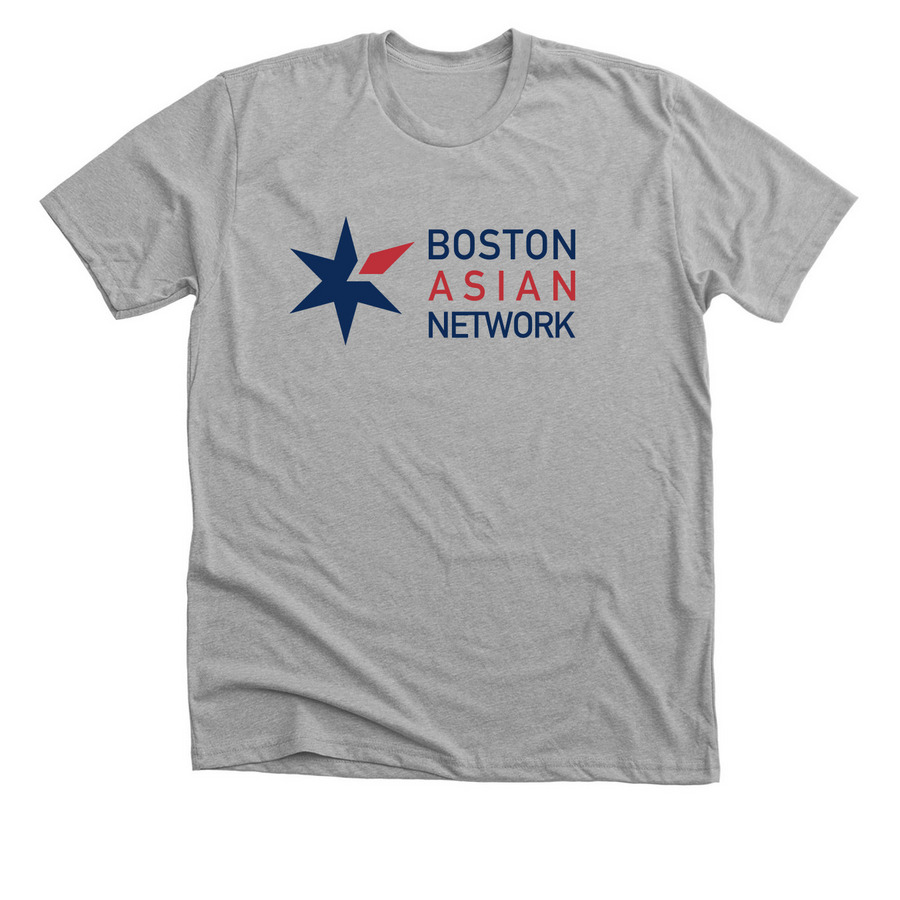
Chapter merchandise
Designs are produced per city as chapters come online. Proceeds go directly into the programs, not into inventory.
Fund a city
Opening a chapter costs money before it produces anything. Donations are what let us start working in a city before there is any revenue there at all.
- DesignChapter branding, campaign templates, and the graphic assets local organizations use for their own events.
- DistributionThe calendar, the mailing list, and the promotion that puts a community event in front of people outside its own circle.
- GroundworkThe unglamorous first months in a new city: meetings, event attendance, and mapping who is already doing the work.
AAPI Network is a 501(c)(3) public charity, EIN 33-2987062. Contributions are tax-deductible to the extent allowed by law, and go toward services delivered to community organizations rather than toward selling those services.
Donate today